With this in mind, let’s take a look at the areas of the plant where retrofitting can help manufacturers:
Safety
Safety is of the utmost importance in any plant, particularly where there is moving machinery. In nonwovens plants there are moving belts, unwinders, winders, slitters and more, and every piece of these machineries poses a potential threat to workers’ safety. Machinery from even 20 years ago does not necessarily have updated safety systems.
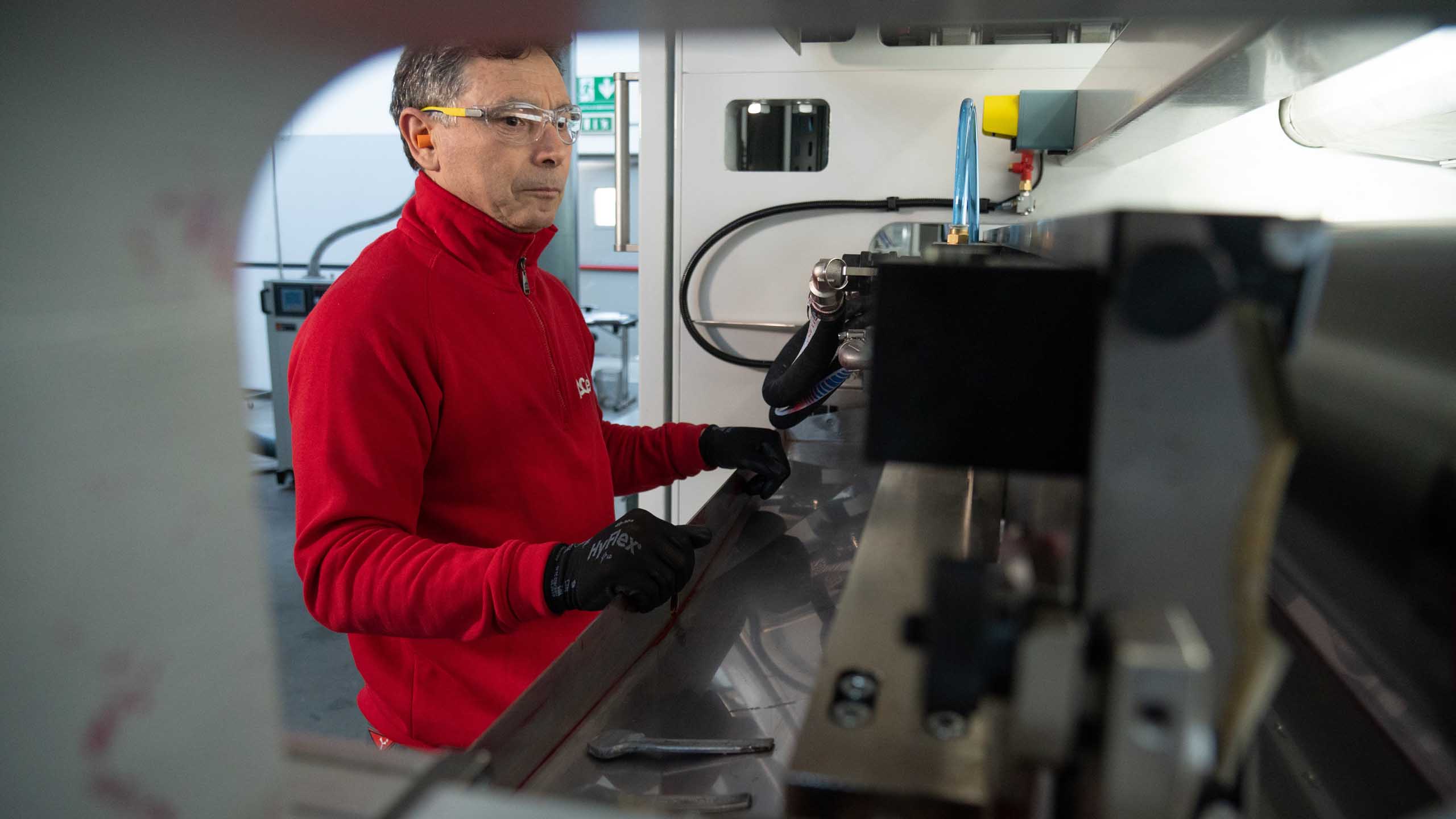
Fortunately, retrofitting nonwovens machinery on the production line to include updated safety features that will bring machinery up to current standards is possible. This can be done by adding any or all of the following safety features to existing equipment:
- Guard rails
- Safety fences
- Doors with interlocking closure
- Accidental breakage protection
- Cameras
- Movement management
Thanks to these, you will minimize the risk of accidental injury for your workers and improve your safety record. You will also bring your plant up to safety standards based on government regulations.
Quality
Quality control (QC) of nonwovens products has becoming increasingly necessary for producers in order for them to meet the demands of their customers. Customers expect defect-free products, a difficult goal to achieve using legacy machinery. Retrofits can improve the quality of the product in two ways.
First, new software functions make it possible to conduct better winding of the product thanks to the possibility of automatically adjusting the speed and tension during the winding process. Second, the mechanical upgrades of the winder itself would place less stress on the product during the winding process, reducing the likelihood that the product would be damaged, wrinkled or otherwise inferior.
Operational efficiency
The goal of manufacturers is to produce the highest quality products in the shortest amount of time possible. In other words, efficiency has to be at its maximum. To obtain this, we must achieve a balance between speed and quality: If the speed of the production line is too high, we risk obtaining a defective product, but if it’s too low, productivity will be affected.
When it comes to machine settings, the key is to find the sweet spot that will allow you to determine the maximum speed at which the machines can operate without compromising the quality of the raw materials or final product.
The answer to achieving maximum operational efficiency is automation. Thanks to sensors installed on the machines, you can increase the speed of operations right up to the point at which the first defects are detected, allowing you to easily find the maximum speed at which you can operate without affecting the quality of the final product.
Best of all, you can determine these settings for various materials and save those settings for future operation. That way, you will know precisely what settings to use, depending on what materials you are working with at any given time.
Energy efficiency
Energy efficiency follows from operational efficiency. When you know the precise settings that will optimize operations, you will be able to minimize energy usage. You will also reduce production waste because you will have little to no product damage.
At the same time, simply by retrofitting your existing machinery and equipment, you are acting in a sustainable manner. You can:
- Switch to high-efficiency motors that perform better and integrate better with new technologies
- Use energy-monitoring technology to ensure your energy targets are met
- Reduce waste by keeping the machines you already have and simply upgrading them to work more efficiently, instead of replacing them and meeting the consequent costs and waste
Read more: Green retrofit for eco-friendly Tissue, Paper and Nonwovens factories