Quality
Quality has always been a concern in manufacturing. In the past, quality control was done manually, with humans checking the product as it came off the production line. With the technology of Industry 4.0, quality management can be more thorough and more cost efficient thanks to improved data quality and information sharing. The improvement to quality management can be directly attributed to an improvement in process control.
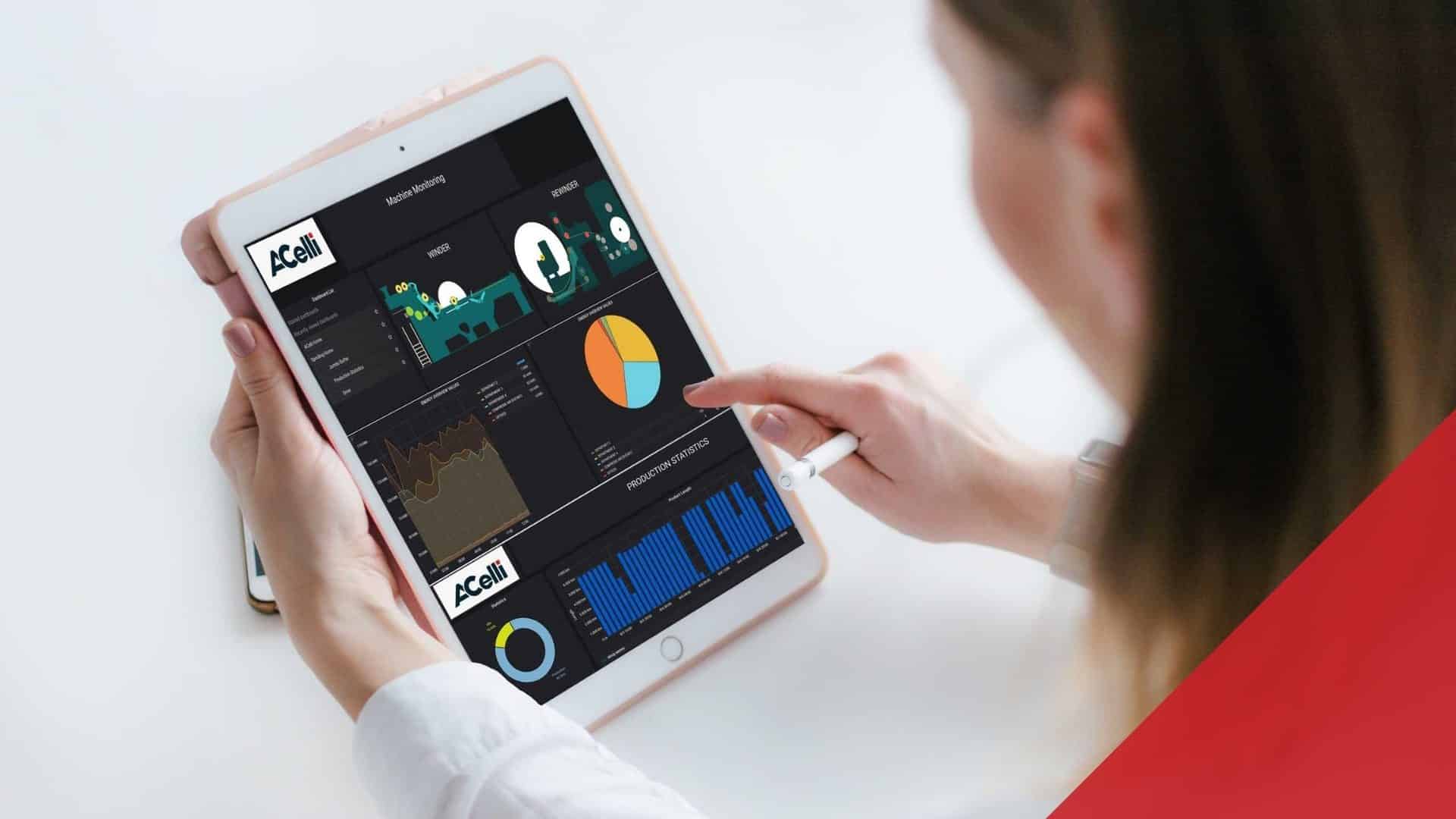
With Industry 4.0 technology, which connects all machinery, equipment and devices together in a complete neural network, anomalies and defects can be detected in real-time anywhere along the production line. This detection occurs locally, and the data can be received remotely. This allows for enhanced multivariate statistical analysis process control, a popular form of advanced process control, as immediate and automated adjustments are made to the relevant area of the production line.
Read more: How to measure tissue and nonwovens mill machinery performance with real time analytics
Supply/Demand Match
With the horizontal collection of data across the manufacturing industry, we no longer need to rely on historical demand to determine supply needs. With the amount of real-time data collected, current demand can be more accurately forecasted, and supply can be adjusted based on that forecast. Not only this, but product design and configuration can be adjusted to meet demand as that demand manifests.
Time-to-Market
The faster a product can be produced, the faster it can get out to the customer and generate revenue. With Industry 4.0 technology, factories can use virtual modelling to run rapid simulations of what a product will look like and how it will function. This can be done in the early phases of product planning and production, allowing for increased product performance and decreased time-to-market. In addition, 3D printing can help test a product prior to full production.
This new technology also makes it possible for customers to co-design their own products. Customers can work with a team of specialists to ensure the product is custom designed to their specifications, then production can commence. This makes production incredibly adaptable to customer and region and decreases time-to-market.
Customer Service/Customer Satisfaction
This ability to have customers co-design a product is just the beginning of the customer service and satisfaction manufacturers can deliver with Industry 4.0 technology. Connection with customers can be a 24/7 experience, regardless of where they are in the world. This makes it possible for manufacturers to offer customers a virtual marketplace and to connect with them via chatbots.
Beyond this, manufacturers can set up augmented reality-guided spare shops, allowing them to use 3D printing technology to quickly and easily create spare parts for customers. This technology will also help manufacturers to constantly monitor their customers’ products and conduct remote predictive maintenance on a regular basis. They will be able to see a problem when it does arise and take the necessary steps to resolve it remotely.
Read more: 3 Advantages of Predictive Maintenance in the Tissue and Nonwovens Industry
Factory Processes
Industry 4.0 technology significantly improves processes within a factory, offering multiple positive outcomes, such as:
- increased production speed;
- increased production yield;
- reduced material consumption;
- reduced energy consumption;
- improved product value.
This can all be accomplished with the introduction of IoT, Smart Energy management, and real-time and data-driven yield optimization.
Asset Management
The need to oversee and manage assets is a significant aspect of factory production. Industry 4.0 technology allows for remote monitoring and control of machines and equipment via sensors so predictive maintenance can be performed. This ensures that machine downtime is kept to a minimum, increasing machine flexibility and ensuring maintenance, repair, and operations all continue to run smoothly and efficiently.
Read more: Data as an Asset: iREEL and intelligent collaboration between production and converting lines
Labour Market
Labour productivity is critical in any industry. With Industry 4.0 technology, labour productivity can easily be increased by reducing wait times and increasing workers overall operational speed. This is attained by using technology that facilitates human-machine interaction and collaboration. With the ability to monitor and control machinery remotely, the workforce can do their job, even when they aren’t onsite.
When it comes to communication with and management of the workforce, device monitoring can be used to assess productivity and chatbots can ensure communication 24/7. This keeps communication open on a global scale and digital performance management can be ongoing.
Read more: Chatbots and Augmented Reality are the future (present) of industrial maintenance
Inventory
No company wants to have too much inventory sitting around in their warehouse. This leads to high capital costs. Fortunately, with today’s Industry 4.0 technology, there are ways to keep an accurate count of stock, so overstock doesn’t happen. For example, cameras in the warehouse can relay images in real-time and intelligent bins can monitor the amount of stock they contain.
Add to this, technology that makes the storage, management, and retrieval of stock easier. An example of this technology is automated guided vehicles, which are designed to transport materials throughout the warehouse and aid in warehouse management by doing things like reorganizing stock as needed to maximize storage space and supporting inventory processes. This type of automation reduces human error and helps keep stock at reasonable levels.